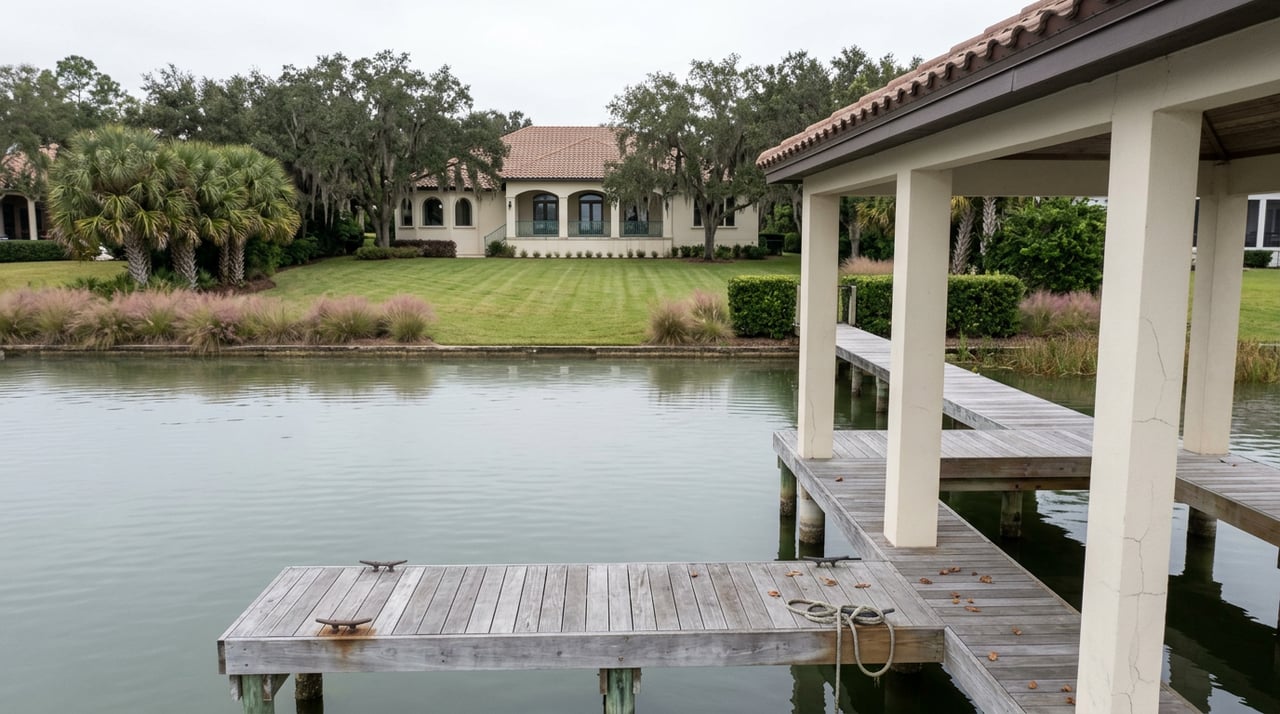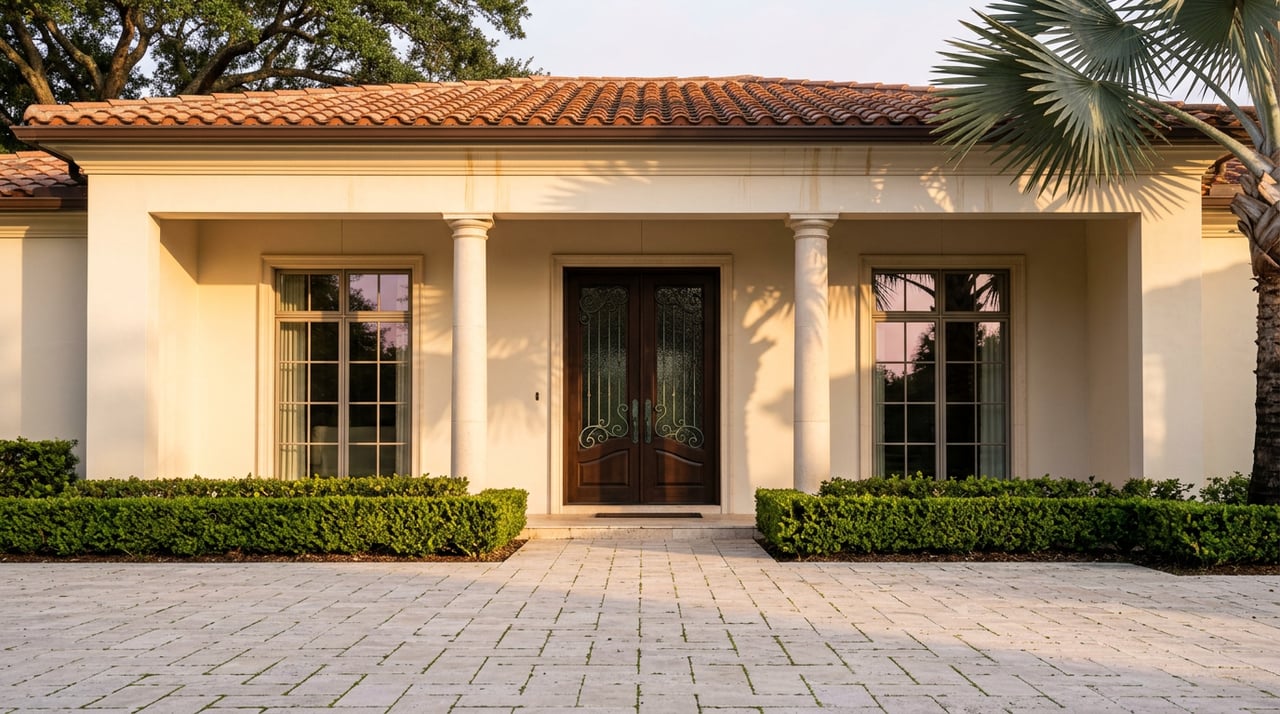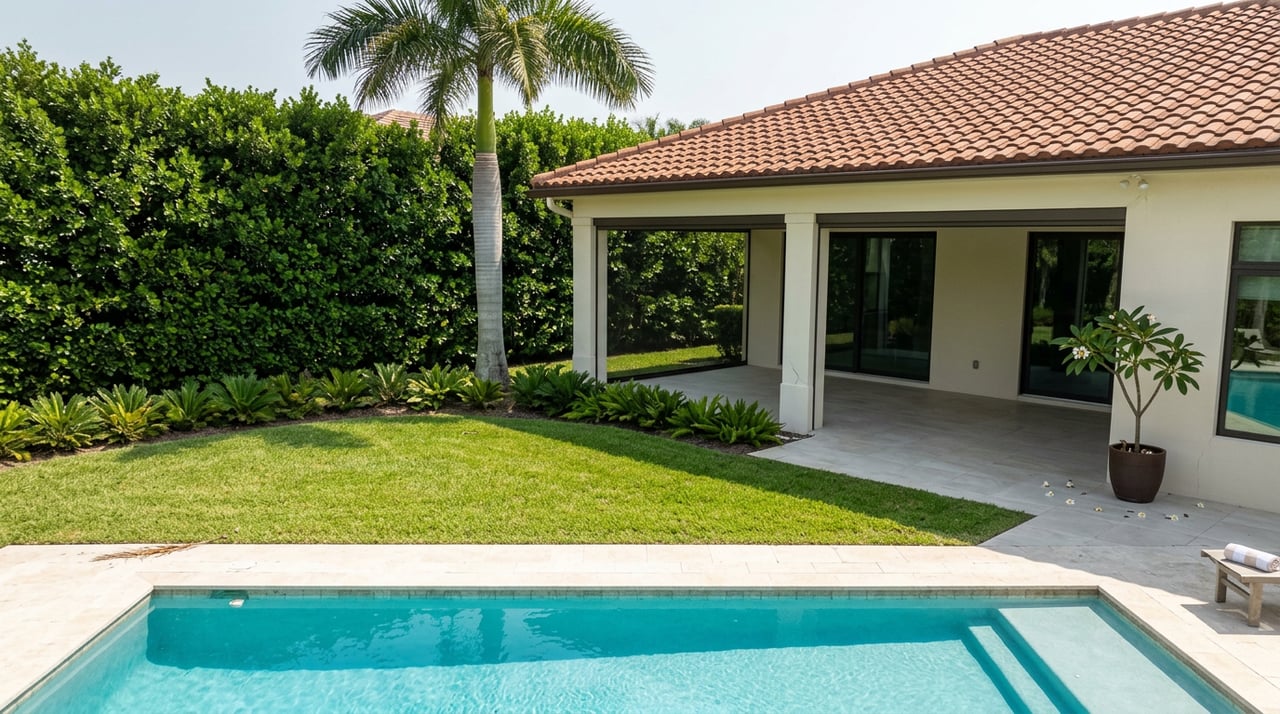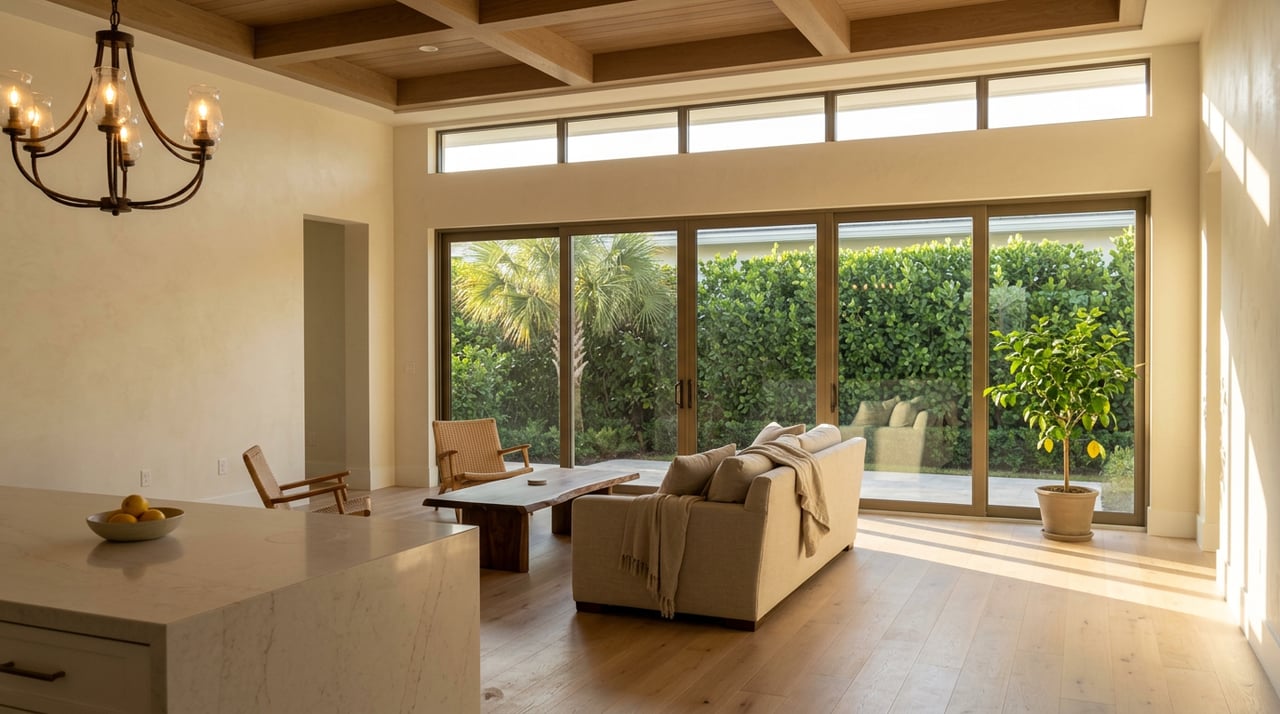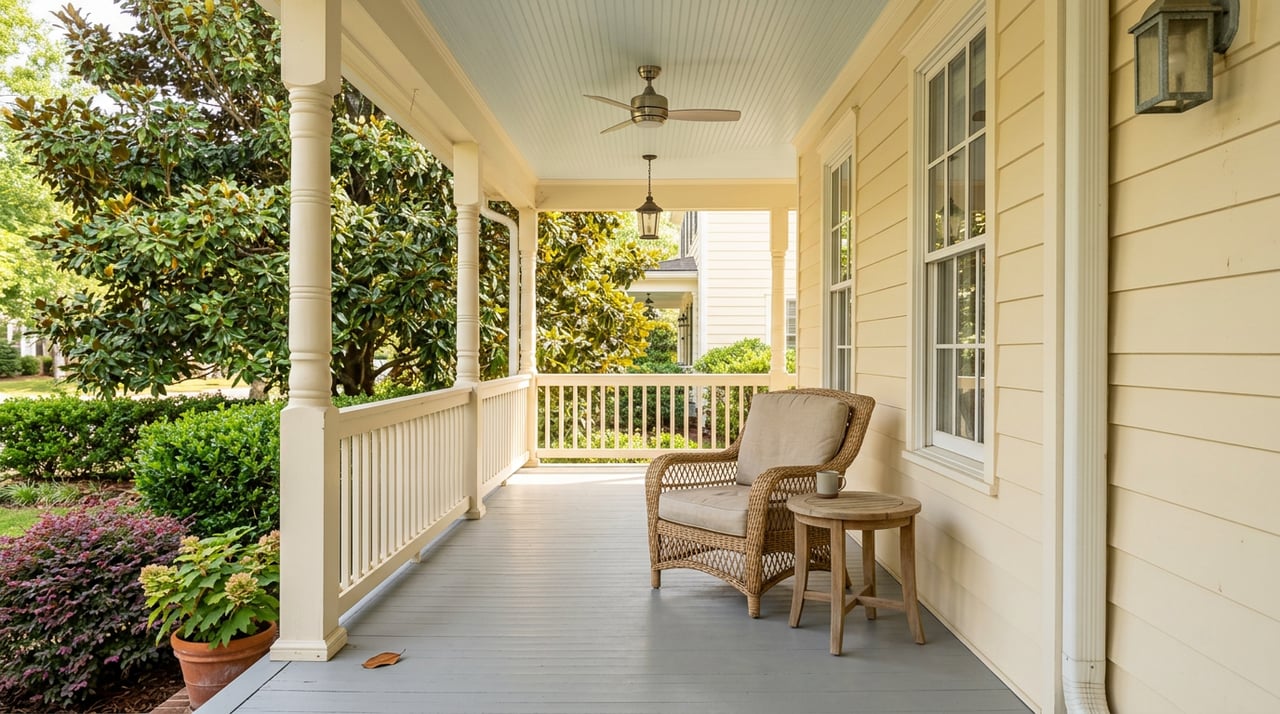
Two homes sit on Realtor listings this week at almost the exact same price. One is a 1990s cottage in East Village. The other is a Mattamy townhome across I-4 in Island Village. On paper they belong in the same buyer's shortlist. In practice, once the tax bill and the association statement land in the mailbox, one owner is writing checks several hundred dollars a month larger than the other. The list price told you almost nothing about that.
Celebration is one of the few Central Florida communities where the parcel, not the median, sets your monthly cost. That is the story the portals cannot tell, and it is the story every serious buyer should walk in already understanding.
The three-layer bill most buyers only see two layers of
Most planned-community buyers expect a mortgage and an HOA. Celebration adds a third layer that is easy to miss because it does not arrive as an HOA statement. It arrives on the property tax bill. The Celebration Community Development District is a public governmental entity responsible for the public common areas within the district, while CROA is a private entity responsible for residential properties and all private amenities and areas of the community. Property owners in the district are subject to a non-ad valorem assessment, which may appear on their annual real estate tax bill from the county tax collector and consists of two parts: debt service, and maintenance.
That split is the whole game. The official Celebration community website states that CROA serves as the homeowners association, while the CDD handles items such as street lights, waterways, mosquito control, common areas, and alleys. That split matters when you are budgeting and planning future use of the property. CROA addresses homeowner issues such as dues, covenants, parks, and pools, while the district manages a wide range of physical infrastructure and maintenance services. A buyer looking only at the HOA line on a listing is seeing about two thirds of the recurring obligation.
Why the village on the listing matters more than the price
Celebration was built in phases, and each phase was financed by a different bond series. The CDD issues Special Assessment Revenue Bonds to finance community infrastructure. Generally, Community Development Districts assess each property owner a yearly capital debt service assessment to pay back those bonds. In the case of the CDD a significant portion of this capital assessment will be prepaid by the developer at the time of closing. Older villages have been paying that debt down for two and three decades. Celebration is older but still has CDD assessments; some bond debt has paid off in earlier phases. Newer product carries a fuller debt-service load.
Layered on top of that public assessment, sub-associations then add village-specific dues for pools, clubhouses, and shared exterior maintenance. The Georgetown Condo Association in North Village has a pool area, a clubhouse, a gazebo with a grill, a fitness center, and pickleball and tennis courts. Mirasol condos in Celebration have a pool, a fitness center, and a coffee bar. The Sienna neighborhood features an exclusive pool for its residents, along with a fitness center and a clubhouse. Artisan Park Village offers an exclusive clubhouse with the largest pool in Celebration, a fitness center, and a restaurant with a bar window for poolside service. Each of those amenity packages is funded by residents inside that specific pocket, not by the master community.
Here is how the layers stack for a typical single-family buyer, based on published ranges:
| Layer | What it funds | Typical range |
|---|---|---|
| CROA (master) | Community-wide standards, private parks, pools, programming | approximately $250–$450 per month |
| Celebration CDD (non-ad valorem on tax bill) | Downtown lake and esplanade, common area landscaping, street trees in the right-of-way | $150–$350 per month added to true carrying cost |
| Sub-association (village or condo) | Village-specific pool, clubhouse, exterior maintenance | Varies widely by product; can equal or exceed CROA |
| All-in HOA benchmark for Celebration | Combined association load | $300 to $600 per month, covering resort-style landscaping, pools, parks, and community programming |
Two homes at the same list price can sit at very different points inside those bands. That is why shopping village by village and parcel by parcel, not just community-wide, is one of the most useful strategies for buying in Celebration. A home in one section may come with different assessment status, rules, or cost structure than a similar-looking home a few streets away.
Island Village is not the original Celebration's CDD
If there is one place buyers most consistently misread the math, it is the west side of I-4. Island Village sits on the western edge of Celebration, physically separated from the original 1990s Disney-developed villages by I-4 and connected back to them by the Celebration Avenue trellis bridge. Mattamy Homes is the master builder for the village, which is being delivered in phases of single-family homes, paired villas, townhomes, and bungalow-style cottages. Construction began in the late 2010s and has continued in phased releases through the mid-2020s.
The temptation is to assume that because the village carries a Celebration address, it carries the same assessment profile. It does not. CDD status in Island Village can vary by sub-phase and parcel. Some Celebration-area properties carry CDD assessments and some do not. Buyers should verify the specific CDD status of any home they are considering with the title company or the builder before closing, and should not assume Island Village follows the same CDD pattern as the older Celebration villages.
There is a second wrinkle unique to new construction. Island Village is governed by HOA covenants administered as part of the broader Celebration master association structure, with village-specific assessments that fund the on-site pool, clubhouse, trail maintenance, conservation areas, and common landscaping. Because the village is still in phased delivery, transitions between developer control and resident-controlled HOA boards may still be in progress for some sub-phases. Buyers writing offers in a developer-controlled association are not buying into the same governance dynamics as buyers a mile east in Main Village, where residents have run their sub-associations for a generation.
What the median actually buys, once you correct for it
Published July 2026 medians land in a wide band depending on the source: the median home price in Celebration was $626,828 as of July 2026, while the average sale price was $733,284, while June 2026 saw a median sale price of $679,990 at the same time the last 30 days showed a median of $600,000 with median days on market at 31. That spread itself is a signal. The median sale-to-list-price ratio was 95.99%, up 1.1 points year-over-year, and 41.18% of homes listed dropped in price.
A measured market gives buyers room to price in the layers the seller is not advertising. Buyers should compare homes based on total monthly cost, not just purchase price. Two homes that look close in value online may feel very different once taxes, assessments, and dues are added in. At Celebration's typical price points, an extra $250 in monthly CDD plus a heavier sub-association can be the difference between two homes an out-of-state buyer treated as substitutes.
Florida's transaction taxes are worth pricing in on the way to the closing table too. Florida charges $0.70 per $100 of consideration on deeds, which means a $530,000 purchase would imply about $3,710 in deed documentary stamp tax before other mortgage-related and recording costs, based on Florida Department of Revenue guidance.
The four documents that tell you what you are actually buying
Before you write an offer inside CROA, ask for these in writing:
- The estoppel letter and CDD assessment schedule for the specific parcel. A spreadsheet showing all villages and product types and the resulting assessments, both debt and O&M, is found at the end of each fiscal year's adopted budget. Match the parcel to the schedule line by line.
- The sub-association's most recent 12 months of meeting minutes and reserve balance. Request the last 12 months of HOA meeting minutes and the current reserve fund balance. Look for any discussion of deferred maintenance, upcoming capital projects, or funding shortfalls. A well-run HOA will be transparent about this. One that is not should be a red flag.
- The ARC design guidelines and any pending applications on the property. Celebration publishes detailed Design Guidelines and requires ARC approval for most visible exterior changes, such as paint, driveways, fences, roofing, solar panels, and landscaping. If you plan to personalize your home, build in time for applications and meeting schedules.
- In Island Village specifically, the developer-to-resident transition status. New-construction buyers should ask whether their sub-phase has turned over to owner control or is still under Mattamy management.
That paperwork exists precisely because the numbers on a listing summary cannot substitute for it.
The corridor is about to change the math again
Two projects at the community's perimeter deserve to sit in the buyer's underwriting today, not the day they open. Ovation Orlando is planned for the former Orlando Sun Resort site near I-4 and U.S. 192. The project is described as a $1 billion, 670,000-square-foot entertainment center with hotels, restaurants, live venues, and multiple dining zones, with a projected opening in 2027. Along with Magnifica south of Celebration and continued Island Village development, these projects could reshape how buyers see the corridor. The buyers who see the corridor first are the ones underwriting village-by-village today.
FAQ
Are Celebration's CDD assessments included in the HOA fee on a listing? No. The HOA line is CROA plus any sub-association. District non-ad valorem assessments appear as a line item on your annual Osceola County real estate property tax bill. That is a separate document from the estoppel.
Can two identical floor plans in different Celebration villages really carry different monthly costs? Yes, and often materially so. CDD assessments can vary by product type and debt status, so two similar homes may have very different carrying costs.
Do the original villages ever pay the CDD debt off? The maintenance portion is permanent, but the debt-service portion is finite. Celebration is older but still has CDD assessments; some bond debt has paid off in earlier phases. Ask the district's records custodian for the bond series funding your parcel and its scheduled payoff.
Buying in Celebration is not a single transaction. It is a decision about which layer stack you want to live inside for the next decade. If you are weighing Main Village against South Village, or trying to decide whether an Island Village Mattamy home is really a better value than a resale across the trellis bridge, the right first step is a parcel-level cost comparison, not another portal scroll. The Landruá Group is glad to build that comparison with you, in English or Spanish, before you write your first offer. Let's Connect.